Freedom from Smoking Starts Here
The MakeLifeNotSmoke System is a modern, step-by-step method that leads to permanent freedom from tobacco. Free. Simple. For everyone
Let’s Talk About Money First
The MakeLifeNotSmoke System is 100% free. There is no Pro version, no VIP club, no hidden fees, and nothing to buy. Ever.
This isn’t a marketing funnel. It isn’t a free trial that leads to a paid course. It’s a complete, practical system — given openly, with no strings attached.
Why is it free? Because the author believes something simple: knowledge that saves health and lives should never be paywalled. If this system helps you, you can support the project voluntarily — but it’s never required. Freedom is not for sale.
Who Is This For?
This system was built first and foremost for one person: the one who has tried to quit many times — and wants to finally succeed.
It’s also for anyone who:
- Has never tried to quit, but is ready to start.
- Is tired of guilt, pressure, and “just use willpower” advice.
- Wants a clear, structured path — not vague motivation.
This system is universal. It works for most people who genuinely want to quit. Everything you need is already included.
Built by Someone Who’s Been There
This system wasn’t created by doctors who’ve never smoked, or by officials who don’t understand addiction, or by marketers trying to sell you a course.
It was built by a former smoker — someone who smoked for 30 years, tried to quit more than 40 times, and finally found a way out. The MakeLifeNotSmoke System combines the latest research in neuroscience and addiction psychology with the lived experience of those who’ve walked this path and never looked back.
You can do this too. And soon, you’ll say: “Quitting was easier than I thought.”
You’re Already on the Path.
Just read. Reflect.
Fill yourself with a new understanding — and follow the system, one step at a time.You don’t need to be perfect.
You don’t need to be ready.
You just need to start.
_With respect and belief in your freedom,
Serge Archakov
Author of the MakeLifeNotSmoke System
The only person who can make you smoke the next cigarette is you. First, you let go of all your doubts and fears. And when you put out that last cigarette — you are already a non-smoker.
— Allen Carr, author of The Easy Way to Stop Smoking
Three Things You Need to Know
Why Do 97% of Quit Attempts Fail in the First Year?
Right now, close your eyes and picture yourself as a non-smoker one month from today. What do you see? Freedom? Lightness? Energy?
Now notice what’s standing between you and that picture.
The Truth Nobody Tells You in “Miracle Method” Ads
- The Willpower Myth: Research from the U.S. National Institutes of Health shows that only 3–5% of people quit by willpower alone. Why? Because willpower is a finite resource — it runs out by evening, under stress, or when you’re tired or bored. Addiction, meanwhile, works 24/7.
- The “One Cigarette” Trap: 84% of relapses happen after the thought “just one won’t count.” Your nicotine-rewired brain will offer you this thought in your weakest moments. And it will do it so elegantly that it will feel like your own idea.
- Physiology Pushes Back. Nicotine binds to acetylcholine receptors in your brain, replacing natural neurotransmitters. When you quit, your brain literally doesn’t know how to function without the “crutch.” So know this: nicotine withdrawal is not a character flaw. It’s a physiological and psychological reality lasting from 72 hours to 3 weeks.
- The Divided Mind: A smoker who hasn’t yet freed themselves lives in two parallel realities. In one — they know smoking kills, drains money, enslaves. In the other — they “enjoy it,” “relieve stress,” “focus.” These realities never overlap. Until you build a third, new reality where this split doesn’t exist. That’s exactly the territory we’re working on.
- Harvard Business School (2019): Among 500 Fortune 500 CEOs, only 8% still smoke (vs. 25% of the general U.S. population). The authors note: “Leadership thinking involves the ability to delay gratification. Smoking is immediate gratification at the expense of the future.”
- Cochrane Review (2019, 267 studies): Combining nicotine replacement therapy (NRT) with psychological support raises quit rates from 3–5% (willpower alone) to up to 35% at 12 months. The best method is a combined one — which is exactly what the MakeLifeNotSmoke System is.
- Lancet (2018): Without psychological reprogramming, the effectiveness of nicotine patches drops from 23% to 9% after one year. Physical relief alone is not enough.
- The “Friend Effect”: Research shows that when people ask friends for support during a quit attempt, friends actually trigger relapses more often than they help — especially if they smoke themselves. Advice: don’t announce your quit to everyone. Do it quietly, for yourself first. People (even friends) love to influence others with their honest opinions and dislike seeing you change — the comfortable swamp is dearer to them. This also applies to “quit smoking groups”: hearing other people’s failure stories creates more doubt than confidence. Walk your path to freedom alone. You have two powerful allies: You and a clear scientific system that supports you at any moment.
Effectiveness of the Most Popular Methods at 12 Months (Cochrane 2019, 267 studies)
- Willpower alone: 3–5%
- Allen Carr’s method (The Easy Way to Stop Smoking): 5–7%
- Nicotine Replacement Therapy (NRT): 17–24%
- Varenicline (e.g., Chantix / Champix): 27–33%
- Combined methods + psychological support: up to 35% — this is our path.
Why Even the Best Methods Fail on Their Own
| Method | Why It Works at First | Why It Breaks Down at 3–6–12 Months |
|---|---|---|
| Allen Carr | Breaks the logical errors in the smoker’s thinking. Carr saw this as revolutionary. | Doesn’t build new neural pathways to replace rituals, doesn’t address physical withdrawal. After relapses, the effect “washes out.” Average effectiveness: 4–7% at one year. |
| Nicotine Replacement Therapy (NRT) | Relieves physical withdrawal. | Doesn’t work on psychological triggers (coffee, stress, alcohol). Lancet (2018): patch effectiveness without mental reprogramming drops from 23% to 9% after one year. |
| Cold Turkey | Gives a short-term rush of pride. | Severe withdrawal (95% relapse in the first weeks), drains psychological resources. Effectiveness: 3–5% at one year. |
| Gradual Reduction | Feels easier and less painful. | NEJM (2016): smokers compensate by taking deeper drags. Self-deception. Effectiveness: similar to willpower alone. |
Other Methods People Use Today
Mechanism: slowly lowering the dose. Why it often fails: it preserves the smoking ritual — many become slaves to the schedule, not free.
Mechanism: delivering pure nicotine. Problem: dependence remains; safety is unproven (WHO, 2021).
Strength: social support. Weakness: they build a “former smoker” identity, keeping focus on the addiction itself.
Mechanism: breath control, better oxygenation. Benefit: improved oxygen levels. Limitation: doesn’t address psychological causes.
The Main Secret of Freedom from Smoking
Key discovery in neuroscience of the last 5 years: addiction doesn’t live in “habit” — it lives in your brain’s prediction system.
When you’re used to smoking with your coffee, your brain prepares a dopamine response to the cigarette BEFORE the coffee. And the absence of a cigarette is interpreted as a prediction error, triggering stress.
That’s why you need a mindset reset. It’s easy to do — just read (and re-read) the text on this page.
Numbers That Change Perception (Read This Slowly)
relapse within the first 3 months because they weren’t prepared for triggers.
— how fast your brain processes the image of a cigarette, faster than conscious thought.
of decisions to smoke are made subconsciously.
each failed attempt lowers the odds of the next one.
of life returned for every cigarette not smoked (BMJ, 2000).
chemical compounds in cigarette smoke, 70 of them carcinogens (CDC / American Lung Association).
92% of Successful People Have Quit All Forms of Smoking
Harvard Business School (2019): Among 500 Fortune 500 CEOs, only 8% still smoke (vs. 25% of the general U.S. population). The researchers note: “Leadership thinking involves the ability to delay gratification. Smoking is immediate gratification at the expense of the future.”
Examples:
1. Elon Musk — never smoked, calls it “the dumbest tax on the poor.”
2. Angela Merkel — hasn’t smoked since her youth, pushed strict anti-tobacco laws in Germany.
3. Jeff Bezos — never smoked, invests in longevity biotech.
4. Oprah Winfrey — quit at 40, called it “the best decision for my self-respect.”
5. Barack Obama — struggled for years, finally quit in 2010 and has stayed free.
Famous People Who Couldn’t Reset Their Mind (And What It Cost Them)
| Name | Profession / Legacy | Years Smoking | Cause of Death | Age |
|---|---|---|---|---|
| Walt Disney | Creator of the animation empire, founder of The Walt Disney Company | Pipe, 40+ years | Lung cancer (hid diagnosis for 10 years) | 65 |
| Steve McQueen | “King of Cool,” Hollywood icon, actor | 35 years, 3–4 packs/day | Mesothelioma (lung cancer with brain metastasis) | 50 |
| Patrick Swayze | Actor (Dirty Dancing), dancer | 40 years | Pancreatic cancer (doctors directly linked to smoking) | 57 |
| John Huston | Legendary director (The African Queen), screenwriter | 60 years, cigars | Emphysema, heart failure | 81 |
| Bette Davis | Hollywood icon, first female president of the Academy | 60 years, 3 packs/day | Breast cancer (metastatic) | 81 |
| George Harrison | Guitarist of The Beatles, composer | 35 years | Lung cancer, then brain cancer | 58 |
| Dean Martin | Singer, actor, member of the Rat Pack | 60 years | Acute respiratory distress syndrome | 78 |
| Natalie Cole | Grammy-winning singer, daughter of Nat King Cole | Decades | Heart failure linked to smoking-related conditions | 65 |
| David Bowie | Music and cultural icon | Decades (quit in the 2000s) | Liver cancer (long-term smoking a known risk factor) | 69 |
| Yul Brynner | Actor (The King and I), Oscar winner | Decades | Lung cancer — recorded a posthumous anti-smoking PSA | 65 |
These people had everything: money, the best doctors, motivation to live. But they had no system for resetting their mind. They tried to fight addiction at the level of habit — not at the level of neuroscience and worldview.
The Tobacco Industry: A Business Built on Death
1. A business model that kills half its customers. The tobacco industry sells a product that, when used as intended, kills approximately half of its long-term users. No other legal industry in history has a comparable record. This is not an accident — it’s the business model. A dead customer is replaced by a new one: the next generation.
2. They knew. They hid it. They lied. Internal tobacco company documents — released during litigation in the United States and Europe — prove that industry executives knew about the link between smoking and lung cancer as early as the 1950s. Instead of warning the public, they launched a decades-long campaign of doubt, denial, and paid “science.” They didn’t just sell a product. They manufactured ignorance.
3. The economics of your destruction. For every $1 of profit the tobacco industry earns, society pays $5–$10 in costs: lost productivity, healthcare bills, shortened lives, broken families. You aren’t buying tobacco. You’re paying for the right to die 10–15 years earlier — and you’re funding the system that keeps selling this to your children.
4. They target the young, the poor, and the vulnerable. Tobacco marketing is deliberately aimed at teenagers, low-income communities, and developing countries — where regulations are weakest and populations are least informed. In many African, Asian, and Latin American markets, tobacco companies spend billions to create addiction where none existed before. This is not commerce. This is predation.
5. Genetic damage across generations. A growing body of research shows that parental smoking damages the DNA of children and grandchildren — epigenetic changes that pass down through generations. When you smoke, you’re not just harming yourself. You’re writing damage into the future of your bloodline.
6. Tobacco as a tool of social control. A population addicted to tobacco is easier to pacify, distract, and drain. It’s not a coincidence that tobacco spread fastest through populations during periods of social turmoil and decline. A person who feels enslaved by a daily habit is less likely to fight for anything larger. Every cigarette is a small act of surrender.
7. The three levels of liberation:
Level 1 — Informational: Understand that the craving you feel is not your desire. It’s a program installed by an industry that profits from your illness.
Level 2 — Economic: Calculate how much money you send every year to companies that profit from your death. Redirect every cent to your own health, family, and future.
Level 3 — Worldview: Form an identity of a free person. “My body, my mind, my time belong only to me. No corporation, no industry, no installed habit will ever own me again.”
8. Practical steps:
1. The decision moment: Not “I’m trying to quit.” Not “I want to smoke less.” But: “I am ending my participation in this industry of death — for myself, for my family, for my future.”
2. The freedom jar: Every time you would have bought a pack, put that money in a jar. Watch it grow. Watch what you were paying for.
3. Information diet: Stop consuming content where smoking is shown as normal, cool, or harmless. The industry pays for that image. Don’t accept it for free.
4. Change of environment: Find like-minded people. But remember: don’t announce your quit publicly. Build silently.
5. Creative realization: Redirect every ounce of energy that went into the smoking ritual into creation — art, business, family, physical training, learning.
“Imagine: your body is territory. Nicotine is the occupier. Every cigarette is an act of surrender. Quitting is not a truce. It is the full expulsion of the occupier from the territory of your body and mind. You are not ‘giving up smoking.’ You are reclaiming what was always yours.”
Ancient Wisdom on Tobacco Dependence
Vedic and Ayurvedic traditions, as interpreted by modern teachers
1. The Vedic view: According to classical texts like the Bhagavata Purana and Ayurvedic writings, tobacco is a plant in the mode of ignorance (tamas), yet with a passionate (rajasic) effect. This creates a uniquely dangerous product: it dulls consciousness (tamas) while creating intense addiction through stimulation (rajas).
2. Energetic mechanics: Smoking is not just a habit — it’s a form of obsession. Lower energies feed on it. Tobacco smoke blocks the heart center (anahata chakra), affects the throat center (vishuddha), and weakens the will center (manipura). Karmically: each cigarette is a small act of self-harm.
3. The psychology of the smoker from a Vedic view: Smoking is a symptom. Tamas: seeking oblivion. Rajas: seeking stimulation. Sattva is absent. The paradox: stress → cigarette → temporary relief → more tamas → new stress.
4. Practice of quitting through “kindling inner fire” (tapasya):
Stage 1 — Diagnosis (1–3 days): Questions like “What energy am I feeding?” Meditation: visualize the smoke as a grey web.
Stage 2 — Cleansing (first 21 days): Physical (diet: less meat, onions, garlic; cool showers), energetic (mantra “Om Namah Shivaya” 108 times, Sitali breathing), mental (focus on a flame).
Stage 3 — Inner fire (days 22–90): Ascetic practices: speech (no criticism, no complaints), food (fast on milk or fruit once a week), physical (daily stretching). Service helps feed the inner fire.
Stage 4 — Transformation (from month 4): Sublimate the desire into creativity, wisdom study, care for others, physical activity. Form a new identity: “I am a clean vessel.”
5. The logic of the spiritual approach (principle of replacement): Smoking is energetic feeding of lower entities. Quitting without replacement = energetic vacuum → depression. Kindling tapas converts the energy into a higher form. Service (seva) is the channel for that energy.
6. Quitting as a dedication (yajna): Burning attachment, ignorance, weakness. Inner fire — tapas. Result: body as a clean temple, mind as a clear instrument.
Final formula: Awareness + Cleansing + Direction of energy into service = Full freedom.
Allen Carr’s Logic That Changed Millions of Smokers’ Minds
“Quitting is easy once you understand the GAME you’ve been pulled into.” Smoking is a logic trap built on six fundamental illusions.
The first cigarette causes disgust. Pleasure only begins once you’re addicted. A cigarette only temporarily removes the withdrawal it created itself. Smoking doesn’t give pleasure — it interrupts suffering that it alone produces.
The metaphor of “a man tied to a chair” — smoking doesn’t solve problems. It IS the problem.
Like tight shoes — taking them off is not a sacrifice. You lose nothing. You stop hurting yourself.
The “Nicotine Monster” metaphor: the craving is the death throes of a dying monster. Don’t fight it — watch it and enjoy it growing weaker.
Carr’s paradox: if smoking gives nothing good and quitting costs nothing, why would willpower be needed? Understanding is enough.
This is the biggest fear, created by society and the industry. In truth, quitting is natural, simple, and even joyful.
CARR’S FINAL ALGORITHM:
Step 1. Decide: “I’m quitting forever.”
Step 2. Celebrate the decision — you’ve become a free person.
Step 3. Don’t expect difficulty — expect ease.
Step 4. Never doubt: one puff wakes the monster. Your freedom is crystal — protect it.
How the Mind Reset Actually Works (NLP & Neuroscience)
Direct address to your subconscious: take a deep breath. Your subconscious hears this right now. New program: spasms and irritability are recovery signals. Anchoring freedom: clench your left fist, picturing yourself free in 3 months. Embedded commands: when you become a non-smoker, sleep improves, new sources of pleasure appear. Pattern break: a cigarette gives nothing you don’t already have.
What happens in the brain: the amygdala lowers anxiety, the prefrontal cortex activates, the nucleus accumbens forms the association “freedom = pleasant,” the hippocampus rewrites the memory of smoking.
What Is Your Habit Really Costing You?
Enter your numbers — see the real price of smoking in money, time, and health.
** Per cigarette: ~10 mg tar, ~1 mg nicotine, ~10 mg CO
* Calculation based on average pack price and global inflation at 3% per year.
* Tar and nicotine data: WHO standards and CDC reports.
The Samurai Secret: How to Drop Fear and Take Action
Are you afraid to quit smoking? Don’t be ashamed to admit it. You’re afraid you won’t succeed. That you’ll relapse. And even more — that without cigarettes, life will become unknown, maybe even empty and grey. You’re afraid of the physical and psychological withdrawal. You’re afraid your irritability will damage your relationships.
Fear is the #1 reason people postpone the day they quit.
But there’s one simple truth the ancient samurai knew. And it applies directly to your decision to quit smoking.
Samurai were taught not to fear deadly combat by overcoming the fear of death — which lies at the foundation of all fear. Samurai learned to die mentally when they first took up the sword, and trained this psychological state, removing all barriers before decisive action. They told themselves: “I am already dead. I no longer exist.” And, freed from the greatest fear, they stopped fearing everything else. They became free from the fear of doing anything. And so, between doing or not doing (given a reasonable choice), they chose TO DO.
Here’s how it works. If you stop fearing death, you stop fearing life. You stop fearing difficulties. You stop fearing pain. You stop fearing change.
Freed from the fear of death, a samurai — even knowing he would die in thirty minutes — could admire the blooming cherry blossoms or write poetry. He didn’t spend his final minutes in panic and horror. He filled them with beauty and meaning.
Now a question for you.
If you know smoking is slowly killing you — every day, every minute, every drag — what do you fear more?
Afraid life without cigarettes will be worse? That you won’t cope? That life will become colorless, unbearable? Ha. Smoking has already made your life worse than it could be. It has already taken your health, money, freedom, time, energy.
“While the coward fears, the Winner wins!”
— Vladimir Dovgan, The Path of the Winner
A winner is not someone who isn’t afraid. A winner is someone who acts despite the fear. Someone who has overcome their fears, complexes, illnesses, poverty.
Fear is a poison that makes you weaker. It paralyzes your mind, your reason, your muscles. It burns bright feelings — joy, love, hope — with acid.
But you can free yourself from this poison.
⚔️ The Samurai Exercise
In silence, alone with yourself, imagine that you are already gone. Understand: this will happen sooner or later, whether you fear it or not. Having imagined that you no longer exist, you’ll realize: nothing terrible has happened. Worrying about the inevitable is the height of foolishness. It’s a manifestation of unconsciousness.
Do this exercise several times, and you’ll see life differently. Once the fear of death disappears, you may — for the first time in your life — see, feel, and understand the infinite beauty of nature, the infinite beauty of every minute we live on this Earth.
You’ll stop wasting your life on endless, meaningless worry. You’ll stop fearing the opinions of strangers who, in truth, don’t care about you at all. You’ll stop fearing that life without cigarettes will be empty.
Because you’ll understand: your life is not cigarettes. Your life is you. Your feelings. Your thoughts. Your relationships. Your dreams. Your freedom.
The best moments of life are placed on the other side of fear.
Take the step. Your freedom is waiting where you stop being afraid.
Start the System →* Ideas and images inspired by Vladimir Dovgan’s The Path of the Winner, adapted for the MakeLifeNotSmoke project.
The Person From the Future: How to Create a New You
You’ve already understood that fear is the main reason many people are still not where they could be. I’m confident the samurai exercise is now your loyal ally. And you’ve stopped being afraid. Now the most important question: what will happen to me when I quit?
THIS IS THE MOST IMPORTANT AND SIMULTANEOUSLY PLEASANT PART OF THE PROCESS — AN UPDATED IMAGE OF YOURSELF. That’s what you’re doing right now! Take a few minutes — picture yourself free from smoking exactly 1 year from now.
Can you see it?
Hey, person from the future, how do you feel there?
A fresher, firmer face. Clear eyes. White teeth. Clean, pleasant breath. A strong body.
Right? Looking like a million? Smiling? More sport, more time for self-realization in your life?
Now picture yourself at a dinner party with good people. Many guests. After a delicious meal, you’re having tea, coffee, drinks, conversation. Everything is wonderful. You’re enjoying the food, the comfort. You’re joking a little, speaking intelligently, people are listening. The topic is interesting.
And you notice: someone is stepping outside for the third time to smoke, comes back after 5 minutes smelling of tobacco (though they can’t smell it themselves), tries to rejoin the conversation, and after a while steps out again, comes back, tries to re-enter, steps out again…
“Hey, this person has some kind of nicotine incontinence! They’ve been zombified into running back and forth, back and forth?!”
How do you perceive this person who’s missing everything important? How do you perceive yourself? Describe yourself beautifully — the person who hasn’t smoked for a year.
… pause … waiting for your description of your updated self … we have plenty of time … don’t rush … this is all for you … inspire yourself and us … we want details!
Good, well done.
Now look even further — count another 10 years forward.
Tell us — what year is it now? How do you look, a person long free from smoking? What house or apartment do you live in? What work do you do — still the same? Or have you found something new, better?
Look: you walk into an old place where you used to hang out — and you see a group of your old smoking friends standing in a circle. They’re smoking, coughing, taking deep drags, arguing that cigarettes have gone up in price again, saying the same things as before — that they’ll quit “if they have to,” “when they want to.”
And you look at them and know: this is empty, decades-old talk…
By the way, how do they look — their faces, teeth, skin tone? How do their clothes smell? Would you call them flourishing people?
You move on — you’ve long had high goals and the strength to achieve them. You walk confidently and easily. Probably, other flourishing people like you are waiting for you.
Describe yourself 10 years from now.
…we want to be inspired by details! Tell us…
* The “new self image” concept is inspired by the American Lung Association’s anti-smoking program (created 1975) and adapted for the MakeLifeNotSmoke project.
10 Simple Tools That Calm the Mind, Reduce Anxiety, and Help You Break Free
How: Stand still 20–40 minutes daily, arms half-circled in front of the chest. Observe your thoughts and sensations as if from the side.
Effect: Releases energetic blocks, relieves tension without a cigarette. A Beijing University of TCM study (2015) showed a 40% reduction in cigarette cravings after one month of practice.
Mechanism: Classic conditioning. When a craving arises, snap the rubber band against the tender skin of your wrist. The sting becomes a psychological anchor: “temptation = discomfort.” The dominant urge is interrupted by the brief distraction, and over time your mind links the two.
Study: Journal of Applied Behavior Analysis (1978) showed 68% effectiveness for distraction techniques when combined with other methods.
Formula: “With every minute I become HEALTHIER, WEALTHIER, MORE CONFIDENT.”
Neuroscience: Repetition forms new neural connections in the prefrontal cortex. Minimum 3 times a day, 5 minutes each.
“Breath of Fire”: Rapid rhythmic belly exhales (120–180 per minute) for 3 minutes.
Effect: Powerful oxygenation, endorphin release. Reduces cravings for 2–4 hours.
- Delay: “I’ll wait 15 minutes.”
- Drink: A glass of water, small sips.
- Distract: Occupy your hands (fidget, pen, spinner).
- Deep breathe: 10 slow deep breaths.
- Do: Physical action (10 squats, 20 jumping jacks).
System: In a notebook or on your phone, write a letter for each smoke-free day: Day 1 = “G”, Day 2 = “GR”, Day 3 = “GRE”… Day 7 = “GREAT!” → reward yourself. By day 30 you’ll have “GREATGREATGREATGREAT!” → celebrate with something meaningful.
Psychology: Visual progress, positive reinforcement.
Step 1: Identify your 3 main smoking rituals (coffee, stress, phone calls).
Step 2: Create a new sequence for each (coffee + 5 deep breaths; stress + rubber band; call + pen in hand).
Step 3: Rehearse for 21 days.
How: Write a contract with a penalty for relapse (donate money to a cause you dislike, run 10 km). Sign it, get a friend to witness.
How: Record not facts, but feelings before and after every urge to smoke.
Result: Within a week you’ll see patterns: “I want to smoke when I feel hurt / bored / helpless.”
Essence: Announce on social media: “I’m quitting. I’ll check in daily.” Then post daily. (See warning below.)
“Your escape from tobacco captivity is your secret (for a while).”
How Combined NRT Works in the MakeLifeNotSmoke System
Patch (baseline support): Days 1–14: 21 mg/24 h (Step 1); Days 15–25: 14 mg/24 h (Step 2); Days 26–30: 7 mg/24 h (Step 3); then full stop.
Gum (emergency support — only to “ride over the crest of a wave”): 2–4 mg as needed, max 10–12 pieces per day.
Anti-anxiety support, affirmations, autogenic training, and a clear day-by-day plan. If you need something for anxiety, consider L-theanine (200 mg, available at most pharmacies and health stores), CalmAid (lavender oil, sold in the US and EU), or ashwagandha (widely available, especially in India and Africa). All are non-habit-forming, don’t require a prescription, and are recognized worldwide.
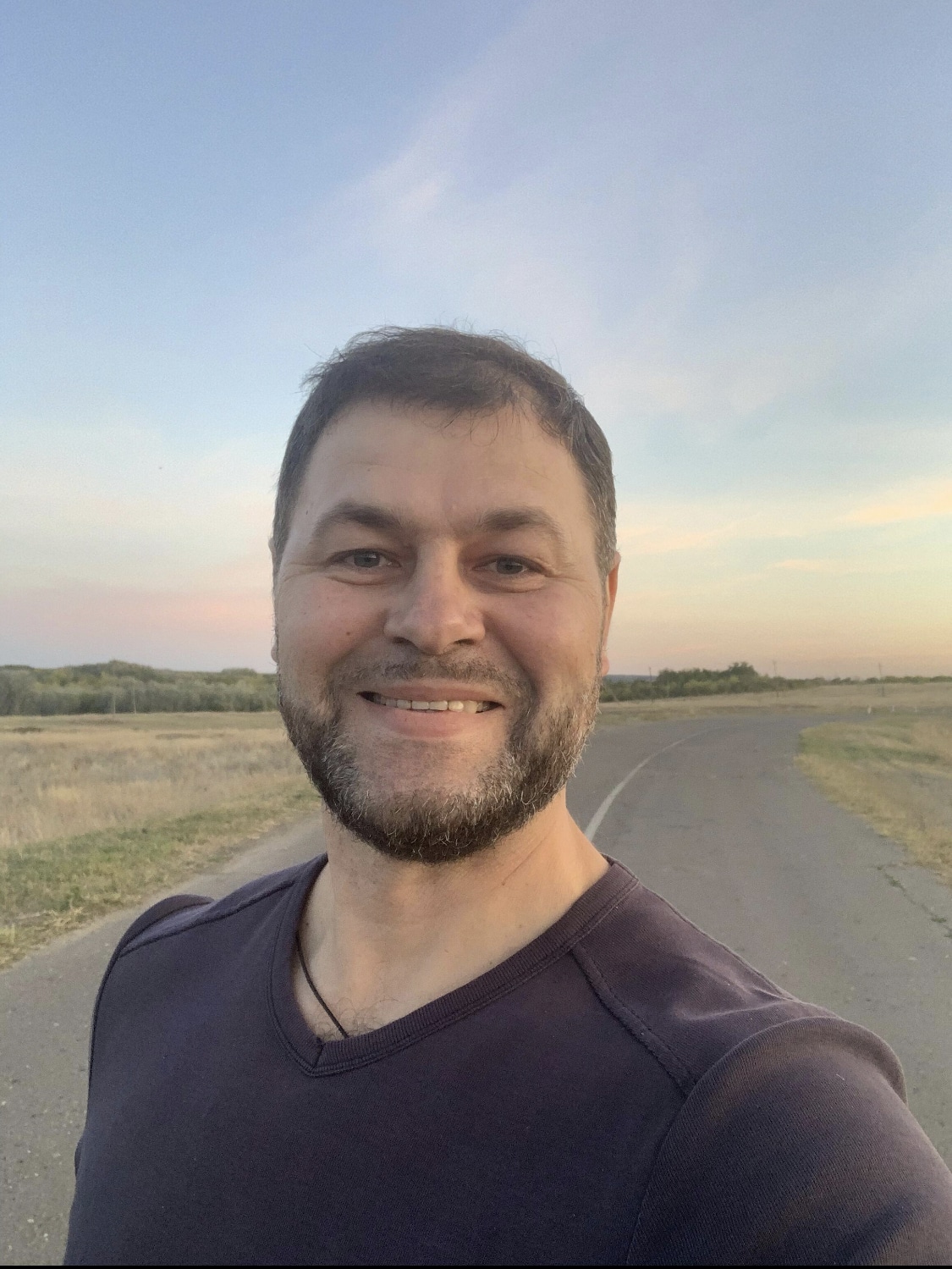
I believe every person is a universe of possibilities and that everyone is capable of changing themselves.
And by improving yourself, you improve the world around you.
With kind wishes,
author of the MakeLifeNotSmoke project,
Serge Archakov